Mobile app design - 2022

Venue Findr App

It all started with a personal frustration. While helping a friend plan her wedding, I noticed how overwhelming it was to find the right venue. Countless websites, vague photos, outdated information, and, worst of all, having to visit multiple locations only to be physically disappointed.

“What if finding the perfect event venue could be as easy and immersive as taking a virtual tour from your phone?”

And just like that, the seed for Venue FindR was planted—a mobile app designed to help users discover, virtually explore, and book event venues effortlessly.

Timeline

12 Weeks

Team

1

Role

UIUX designer/ Product Owner

Tools

Figma, Notion, Miro

the challenge

Problem statement

The current venue discovery landscape forces users to navigate multiple platforms with incomplete information, rely on potentially misleading photos, and coordinate separately for tours and bookings. This creates a barrier between users and their perfect event space, turning what should be an exciting planning experience into a stressful, time-consuming ordeal. Event planners and individuals struggle to efficiently discover and book suitable venues due to limited visual information, time-consuming physical visits, and fragmented booking processes, leading to frustration, wasted time, and uncertainty in their venue selection decisions.

Key pain points

I spent weeks just shortlisting places, only to find some were already booked or didn't match my needs.

Time-Consuming Venue Discovery

Photos can be very deceiving. I need to see the space I am interested in to know if it fits my event.

Lack of Visual Clarity

I found a venue I liked but had to email them separately to book. Why not do it all in one place?"

Fragmented Booking Process

discovery phase

User Research

I began the design journey with empathy. To avoid assumptions, I conducted interviews and surveys with event planners, soon-to-be-wed couples, corporate event coordinators, and frequent party hosts. understand user behaviors, pain points, and desires. I used Claude AI to help structure my interview questions and later analyze responses for common themes

research insights

Through interviews, surveys, and competitive analysis, several critical insights emerged that would shape the product direction:

Felt current platforms lacked transparency
0 %
Wanted to see venues before visiting in person
0 %
Preferred mobile accessibility over desktop
0 %

user personas

"I just want to see what the venue actually looks like without having to drive across town every weekend."
Goals: Find beautiful venue within budget, see realistic representations, efficient search.
Painpoint: Misleading photos, time off work for visits, difficult comparisons, booking complexity

Ayomide, 28 Marketing Manager

"Time is money in my line of work. I need to find venues, get confirmations, and move on to the next task."
Goals: Professional venues with, quick booking, mobile access, and efficient management.
Pain Point: Slow venue responses, lacking detailed info, no centralized tracking.

Chukwudi, 35 Events Coordinator
the solution and design decisions

How do I solve this problem?

Based on research insights, I identified three core solutions that would transform the venue discovery and booking experience. Each solution directly addresses a critical pain point uncovered during user research. With the core solutions defined, I translated these into specific design decisions and features that would deliver the best user experience.

Immersive Virtual Tours

The Problem: Users waste time visiting venues that don’t meet their needs, and photos are often misleading.

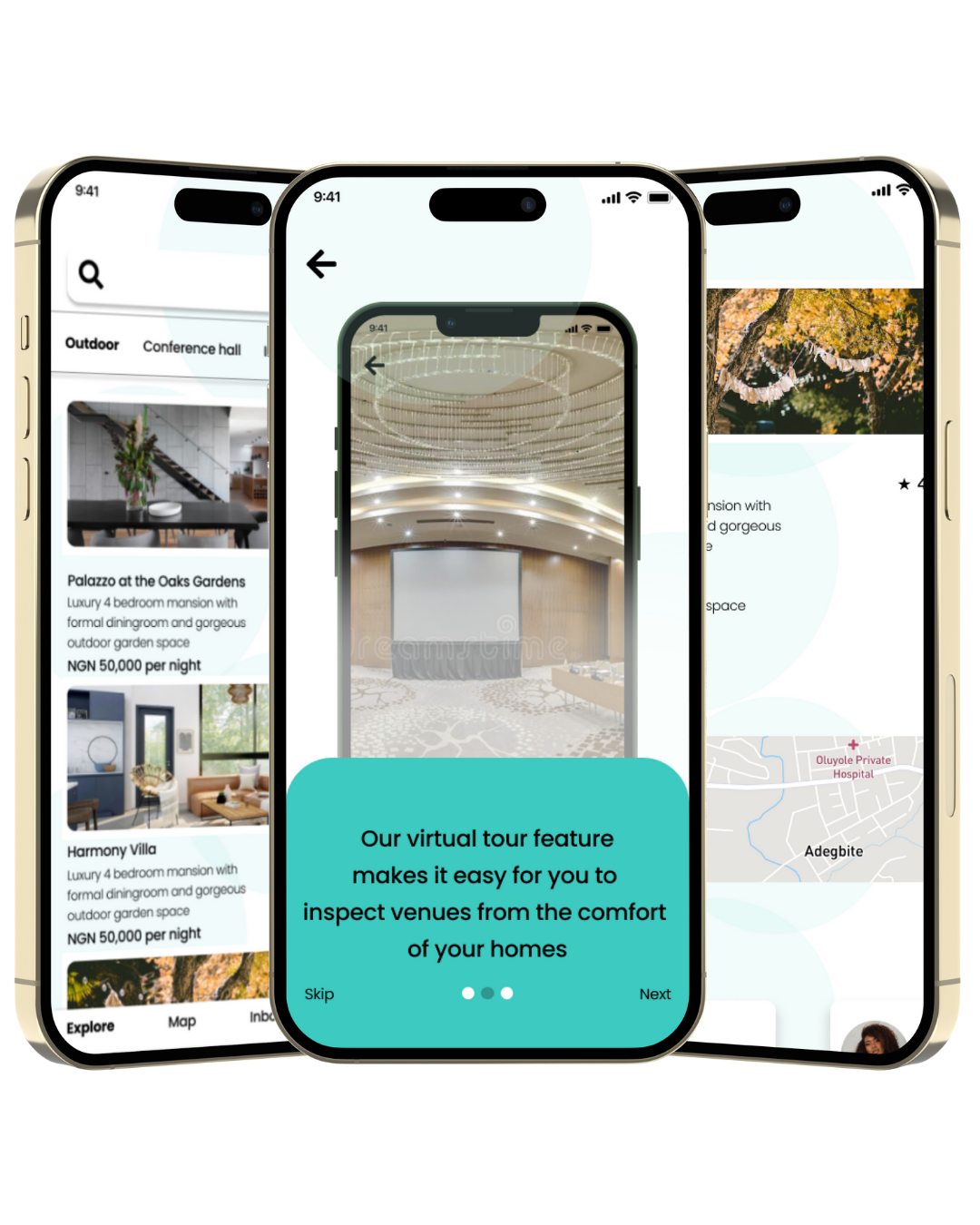
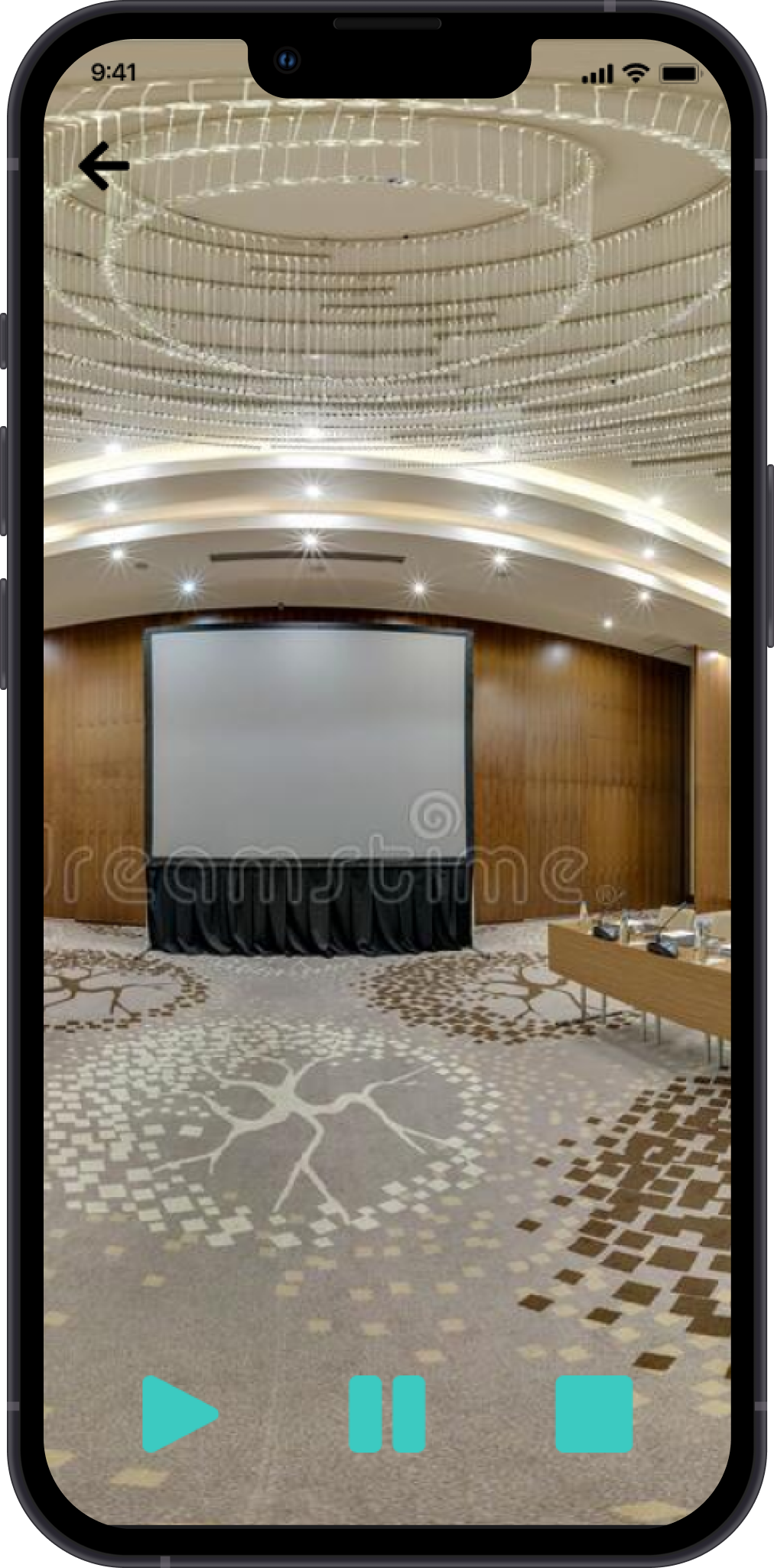
The Solution: 360° virtual tours allow users to explore venues remotely in an immersive way, visualizing different event setups and getting a realistic sense of the space before committing to a physical visit. This builds confidence and saves valuable time.

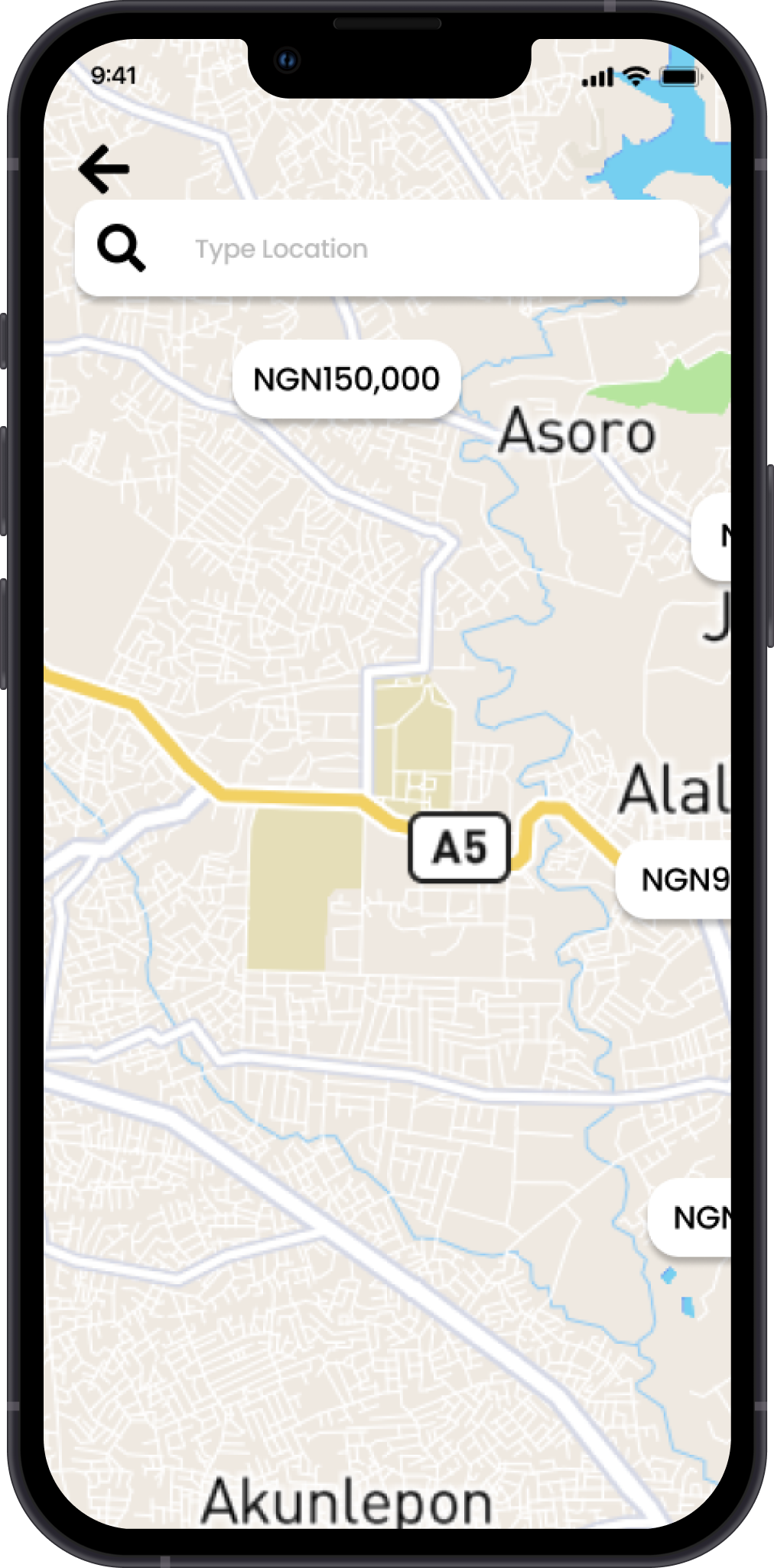
Map Feature for smart location-based discovery.

The Problem: Finding venues in preferred locations is time-consuming, requiring users to search multiple platforms and manually check addresses.

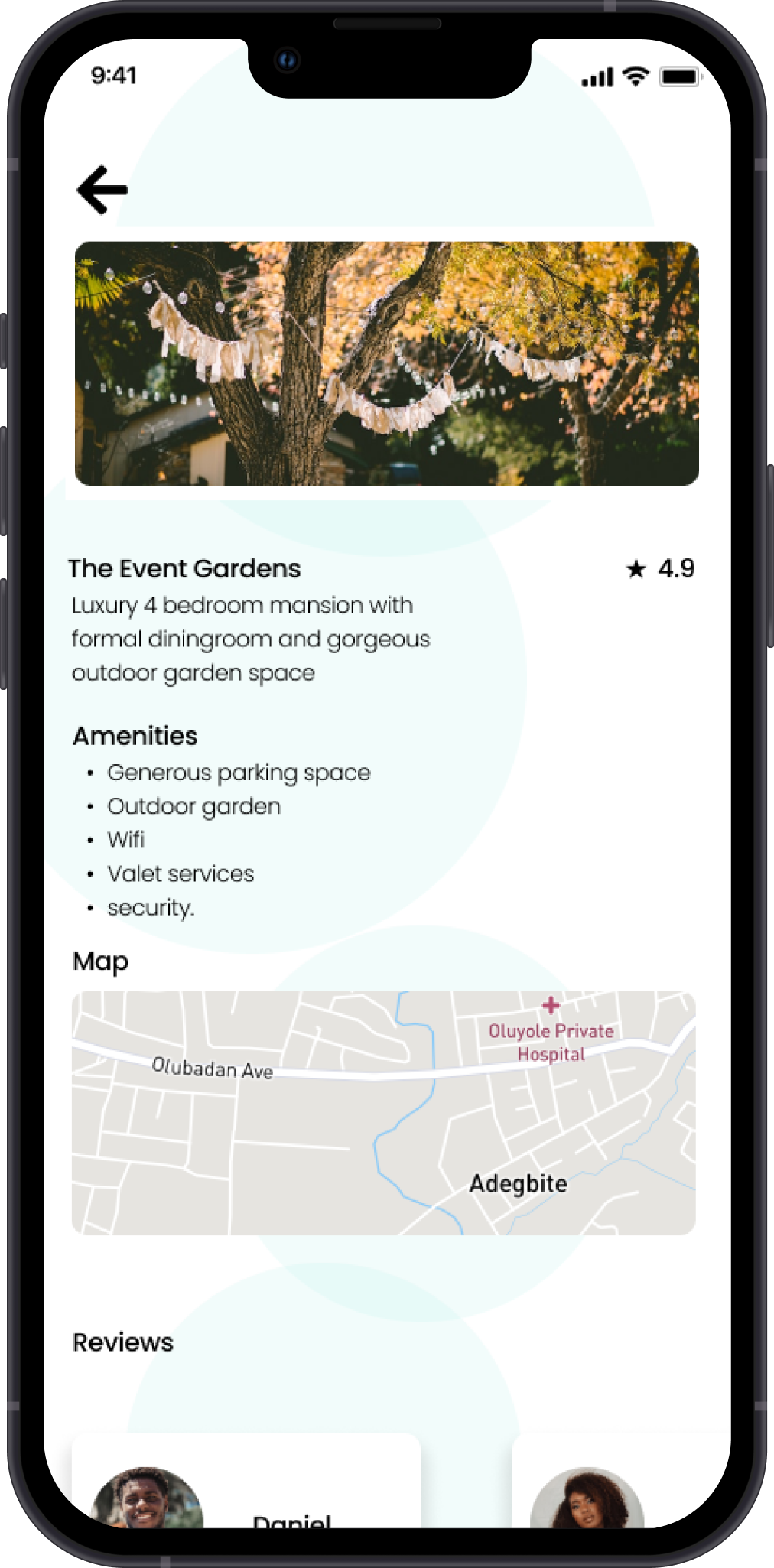
The Solution: An integrated map feature with location-based search enables users to discover venues by proximity, filter by their preferred areas, and visually compare multiple options. This makes venue discovery intuitive and geographically relevant.

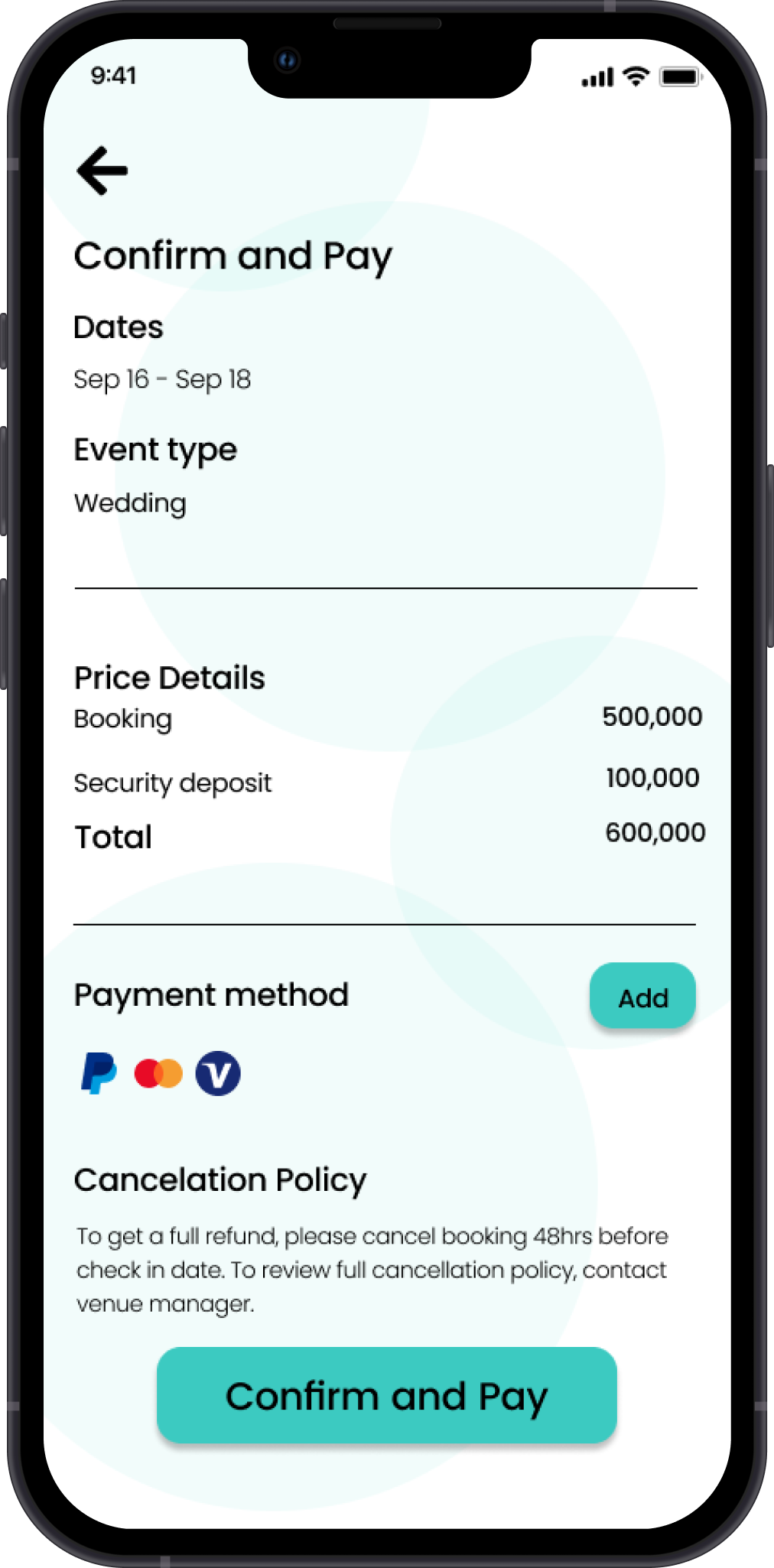
Seamless In-App Booking

The Problem: The booking process is fragmented across emails, phone calls, and separate platforms, creating friction and delays.

The Solution: A unified booking flow within the app allows users to check real-time availability, request bookings, and manage their reservations—all in one place. This eliminates the back-and-forth and streamlines the entire process from discovery to confirmation.

wireframes and early concepts

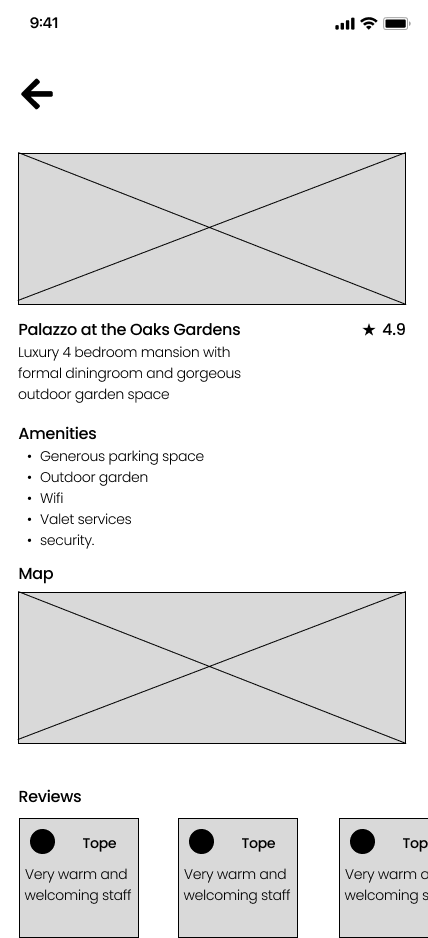
The vision was simple: create a seamless platform that empowers users to discover, explore, and book venues effortlessly. I leveraged AI wireframing tools to rapidly explore various layout variations before narrowing to 3 concepts for user testing. I started with low-fidelity sketches that were then translated into wireframes using Figma.

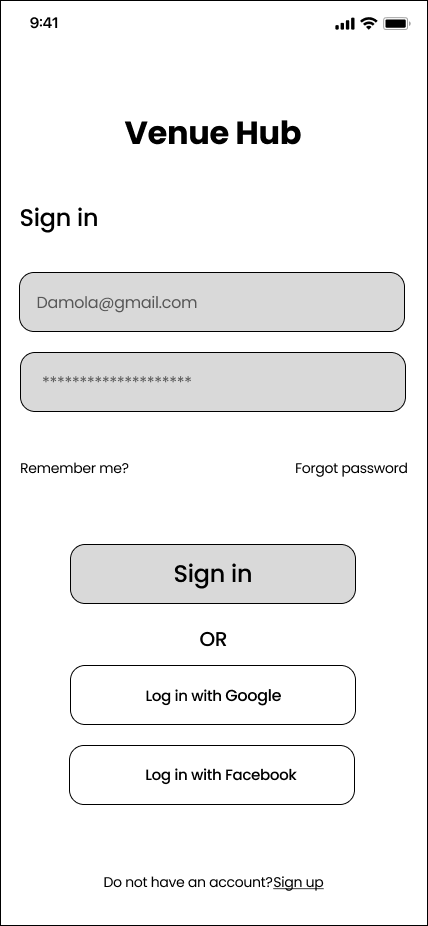
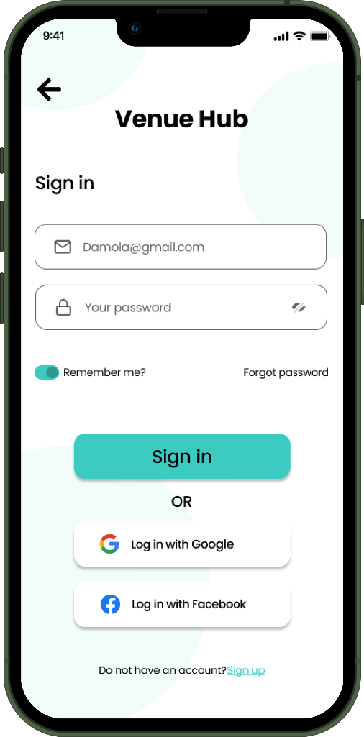
Authentication

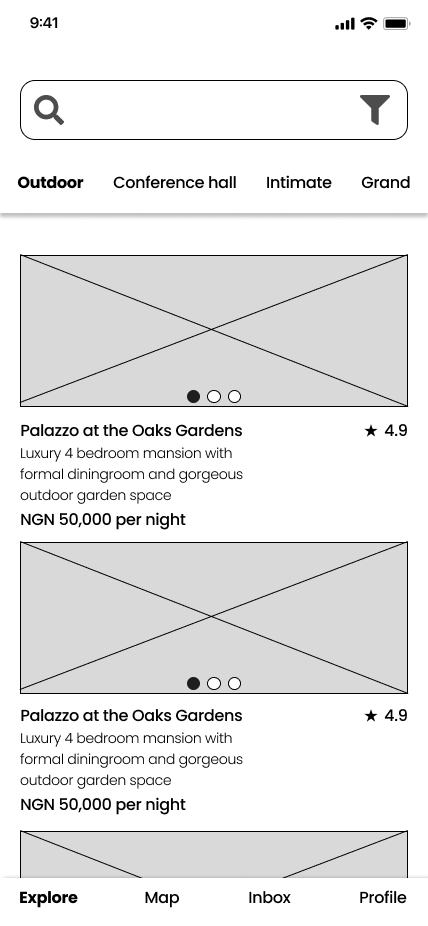
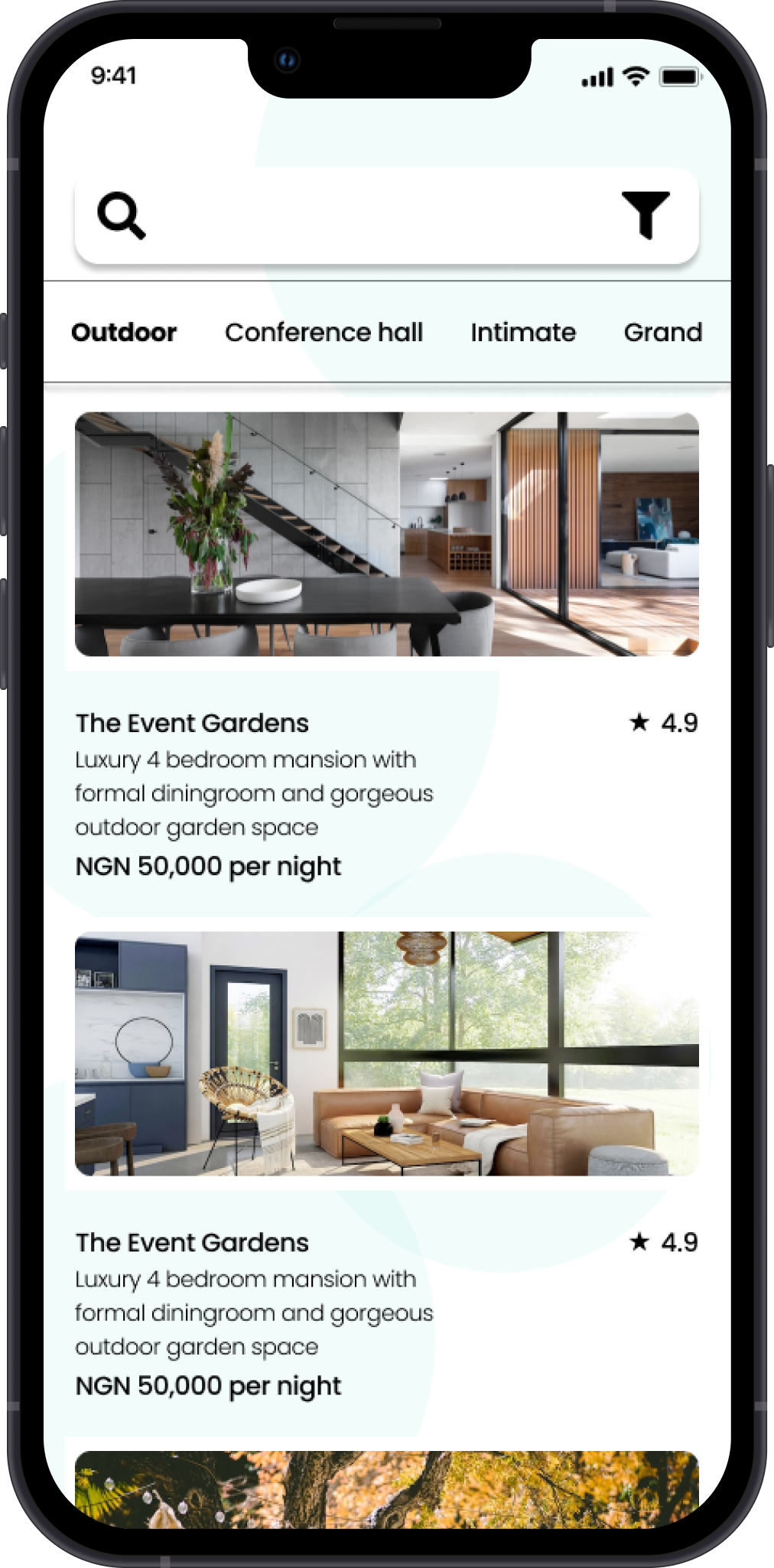
Browse Venues

Detailed View
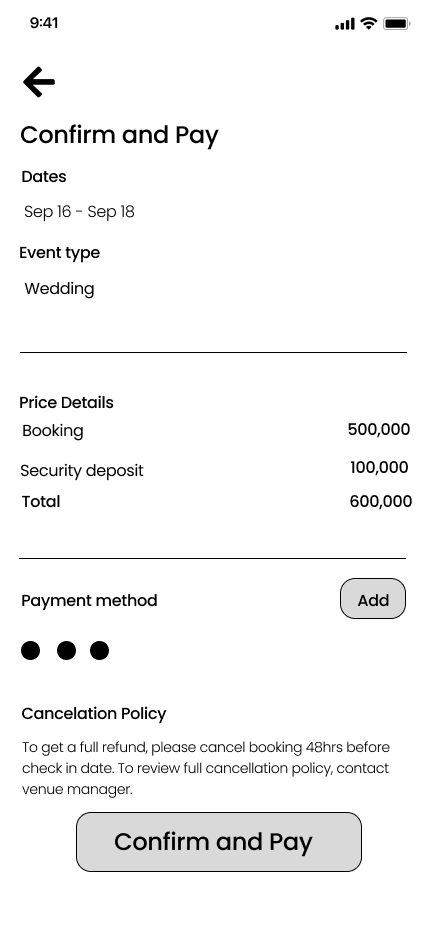
Book Venue
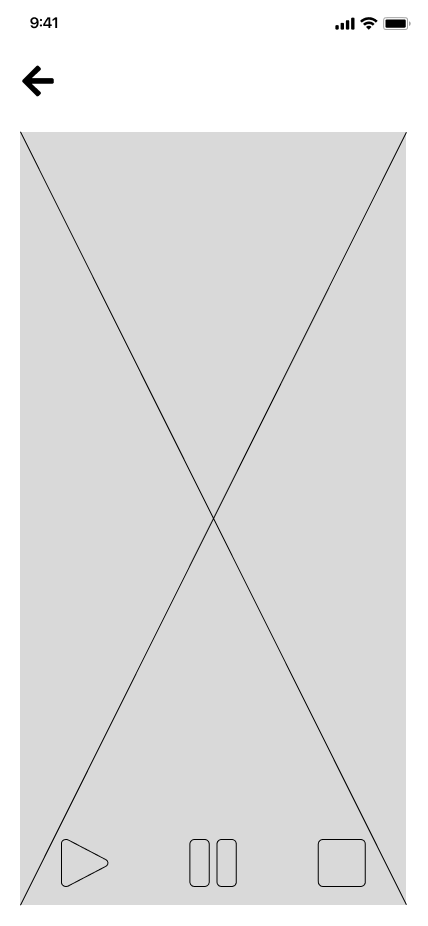
Tour Venue
Designing the experience

From Concept to Reality

  • Information Architecture

    I designed the app navigation based on information gathered from the research conducted.

  • WIreframing

    Created low-fidelity wireframes to test core user flows before visual design.

  • Visual Design

    With the blueprint in hand, I designed the Venue FindR UI, keeping it clean, modern, and emotionally engaging. I Used AI-powered plugins to generate consistent, accessible color palettes and ensure proper contrast ratios.

  • Prototyping and Testing

    Built interactive prototypes and iterated based on usability testing feedback.

Prototyping and testing

I built an interactive prototype in Figma and conducted moderated remote testing sessions with 5 participants who matched my user personas: newly engaged couples, casual party planners, and corporate assistants.

Testing tasks

"You're planning an engagement party for 300 guests under NGN10,000,000. Use the app to find a suitable venue, take a virtual tour, and start a booking request."

Key Observations

Iterations Based on Feedback

Issue User Feedback Solution
Map Navigation
“It would be nice if I can just go straight to the map and search for the location I am looking for instead of moving the map around.”
Added a search bar to the map for direct location input, saving time and improving usability.
Venue Information
“How do I even know which venue I want to select when I cannot see more details at a first glance?”
Enhanced home page with more detailed venue previews, allowing users to make informed decisions at a glance.

Iterations Based on Feedback

After iterations and polishing, the prototype was completed, marking the end of Venue FindR’s MVP. Here’s what it achieved:

Of testers used the virtual tour feature
0 %
Said virtual tours increased their booking confidence
0 %
Successfully completed core tasks without assistance
0 %
Faster venue discovery compared to traditional methods
0 %

Final Designs

Authentication

Browse Venues

Detailed View
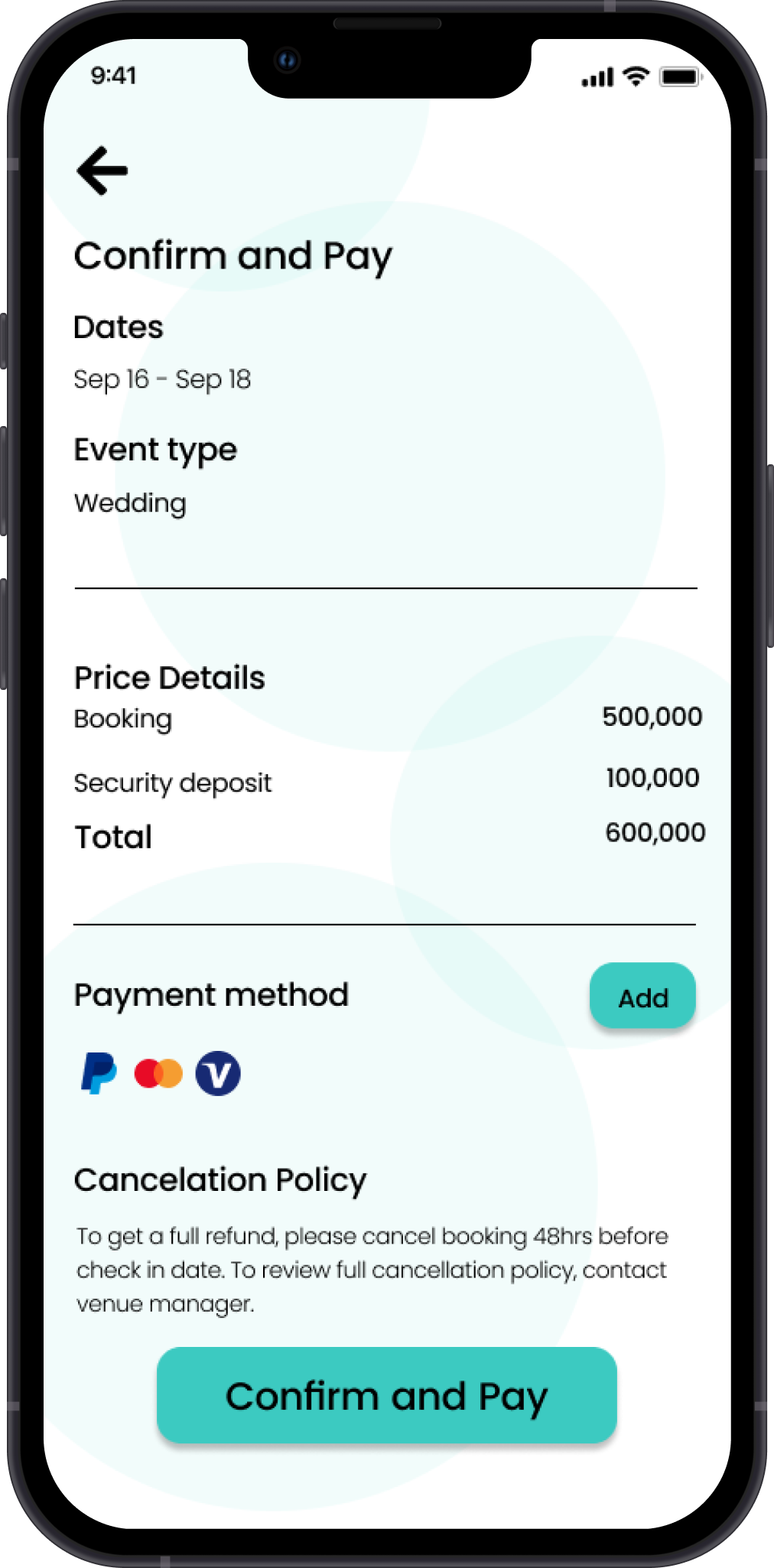
Book Venue

Tour Venue

Reflections and Learning

Designing Venue FindR taught me the value of deep user empathy and how critical it is to combine functionality with emotional clarity, especially for experiences involving big life moments.

Future Enhancements

Final Thoughts

Venue FindR started as a solution to a personal problem but evolved into something much bigger: a tool to empower users to explore, compare, and book event spaces without stress or uncertainty. It is not just about finding a venue; it is about creating unforgettable moments with confidence and clarity.